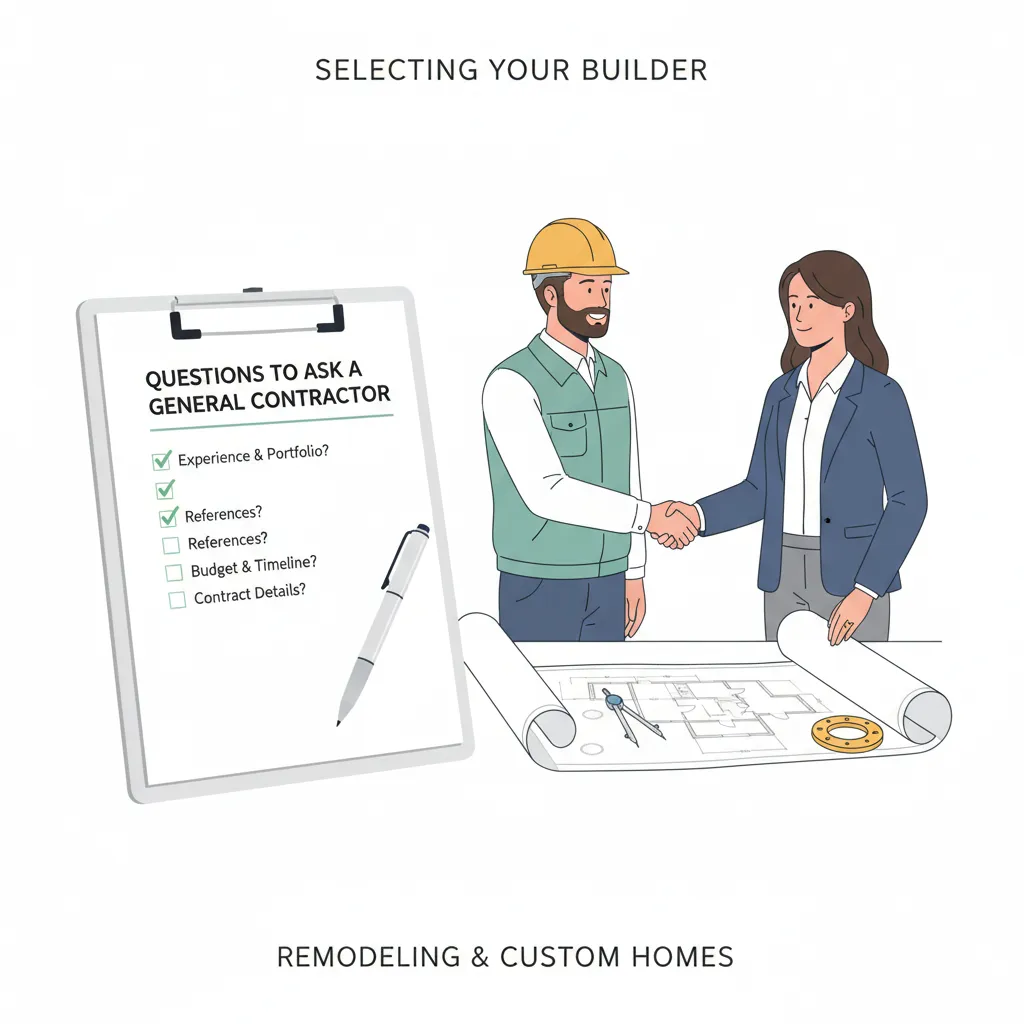
Confidently Hire with These Questions to Ask a General Contractor
Whether you’re planning a simple renovation or building a dream home from scratch, knowing the right questions to ask a general contractor can help you hire with confidence. You want a professional who is licensed, insured, financially stable, and committed to clear communication. In this guide, you will learn the essential points to cover before any contract is signed. By focusing on licensing, payment terms, references, timelines, and final details, you can avoid costly surprises and keep your project on track.
Verify their license and insurance
Always start by confirming that your contractor holds a valid license for the specific work you need. Different states or provinces set their own licensing rules, so ask for details on the type of license and check it against official databases to ensure it is current. This helps you avoid issues with permits and local codes, and it also keeps your homeowner’s insurance intact if something goes wrong.
You should also request proof of general liability insurance and workers’ compensation insurance. According to WikiQuestions, verifying insurance documents by contacting the provider ensures the contractor has the right coverage. This step protects you from being liable for damages or on-site injuries. If you are still learning how to spot fully vetted professionals, check out finding reliable general contractors for more detailed tips.
Outline payment terms in detail
Talking about money may feel uncomfortable, but it’s one of the most critical parts of any project. A clear payment schedule establishes trust and transparency. You might see staged payments tied to project milestones, for example, a deposit, a mid-project payment, and a final payment. Discussing deposits is essential because homeowners can expect to pay around 10% to 33% upfront on most residential projects, according to Levelset. Many experts consider deposits much above 50% to be excessive, so ask why a contractor needs a larger initial sum if that’s on the table.
You also need to agree on the final payment date. Many contractors aim to collect it within 45 to 60 days after the project wraps, per DOZR. Some may offer early payment incentives, and others might have “pay-when-paid” clauses that can delay subcontractor payments. These details can influence the pace of work on your build or remodel, so clarify them in writing. For more on this topic, explore how to choose a general contractor to see how payment structures often shape the entire project relationship.
Check references and project history
Past results reveal a great deal about future performance. Ask for references from previous clients and spend time talking with them. You want to hear about the contractor’s responsiveness, professionalism, and the quality of the finished work. According to Sweeten, checking multiple references is one of the best ways to confirm a contractor’s reliability and experience.
You should also request information on the contractor’s past projects that match your scope. Whether it’s a kitchen renovation, a two-story addition, or a custom home, knowing that your contractor has handled similar work helps ensure the final outcome meets your standards. If you’re curious about how specialists and subcontractors factor into this process, you might find general contractor vs subcontractor differences helpful.
Review communication and timelines
You’ll want to understand how your contractor handles day-to-day updates, whether they prefer phone calls, emails, or weekly site visits. Clear communication can prevent small issues from growing into major setbacks. Ask what happens if the project falls behind schedule and how conflicts or delays will be addressed.
For instance, it’s common to tie payment to project milestones, so if a certain phase is unexpectedly delayed, you need to know how that affects your billing. Talking through progress checks, setting up project calendars, and assigning point people on both sides can streamline communication. If you’re still unsure about what to look for beyond the schedule, see our resource on what to look for in a general contractor.
Clarify final contract details
Your written contract should be thorough. It must include clear payment deadlines, milestone descriptions, any dispute resolution clauses, and what happens if either party terminates the agreement. DOZR emphasizes having a legally reviewed contract so both you and your general contractor are on the same page and protected from misunderstandings.
Don’t hesitate to request changes if you see vague or confusing language in the draft. Additional details might include warranty information, cleanup responsibilities, or whether you can make mid-project changes—and how those changes will affect your timeline and budget. This is also an ideal time to decide if you need a contingency fund for unexpected issues.
Key questions to ask before you sign
It can help to organize your must-ask items under a few main categories. When meeting contractors, consider bringing up these points:
Licensing: “Can I see your current license, and can I verify it online?”
Insurance: “When does your insurance policy expire, and what exactly does it cover?”
Payment terms: “How do you structure deposits, progress payments, and the final balance?”
Communication: “Who is my main contact person, and how often will we get updates?”
Contract clarity: “Is everything in writing, and how will changes or disputes be handled?”
These targeted questions provide concrete details you can compare across multiple contractors, making it easier to identify the best fit.
Next steps to get started
Hiring a general contractor is more than a financial decision. It is about partnership, open conversation, and trust. Begin with thorough research on licensing, payment, past work, and communication style. Reading up on how to choose a general contractor is a great next step, especially if you still have questions about balancing cost and quality.
If you’re looking for a contractor who offers personalized planning and financial advice in Northern California, reach out to Olive City Construction for a consultation. They focus on tailored solutions suited to your budget and vision. Visit their website at https://olivecityconstruction.com/ to start a conversation about your home remodel or custom build.
By laying the right groundwork, you can hire with confidence. Asking the right questions sets both you and your contractor up for success, so you can watch your home project come to life with fewer surprises and stronger peace of mind.
