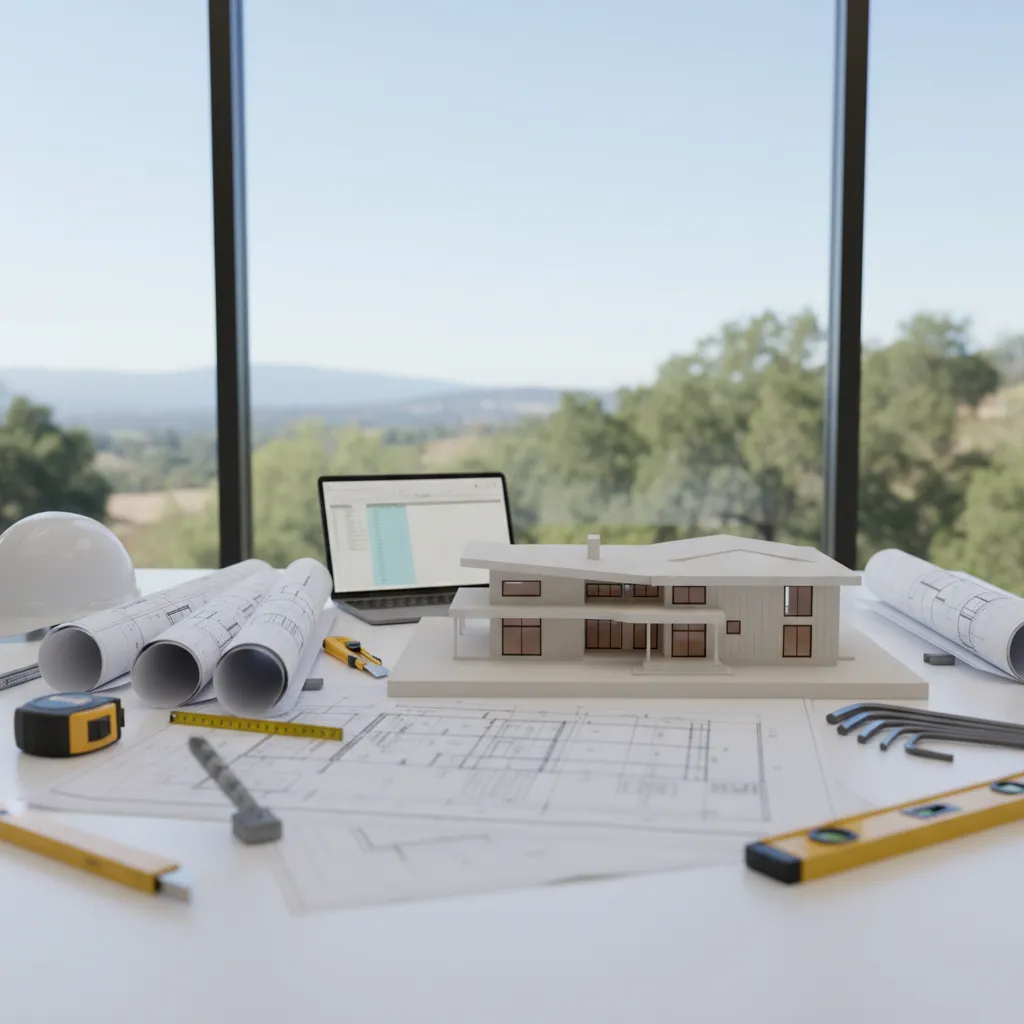
Avoid Mistakes in Your Custom Home Pre-Construction Process in Chico
Avoid Mistakes in Your Custom Home Pre-Construction Process in Chico
A custom home is one of the biggest investments you will ever make. The custom home pre-construction process in Chico is where you protect that investment, long before any concrete is poured or walls go up.
When you get this early phase right, your build is smoother, faster, and far less stressful. When you rush it, you see surprise costs, design changes, and permit delays that can push your move-in date back by months.
This guide walks you through the pre-construction steps in simple language so you know what to expect and how to avoid the most common mistakes in Chico, CA.
Understand what “pre-construction” really means
Pre-construction is everything that happens before physical building starts. It usually includes:
Dreaming and planning your home
Setting a realistic budget
Choosing your land and checking if it is buildable
Working with a designer or architect
Getting engineering done
Handling permits and approvals
Finalizing your construction contract and timeline
In California, this planning and design stage alone often takes 3 to 6 months, because you need to develop floor plans, pick finishes, define the scope of work, and prepare permit documents that match local building codes and energy rules (Golden State Design & Engineering).
If you treat pre-construction as a quick paperwork step, you will miss chances to save money and prevent problems. Think of it as building the roadmap for your entire project.
Start with a clear vision and must‑haves
One common mistake is starting with a floor plan you find online instead of starting with your life and your land.
In Chico, your day-to-day lifestyle should guide your design. Before you talk to a builder or architect, sit down and write out:
How many bedrooms and bathrooms you truly need
How you use your kitchen and living spaces
Whether you need a home office, hobby room, or multi-generational suite
How much storage you want for tools, sports gear, or farm equipment
Outdoor spaces you care about, such as a covered patio, pool, or garden
Many Chico builders recommend collecting inspiration from Pinterest, Houzz, and design magazines to help define your style and must-have features (SM Built). These images help your design team understand what “modern farmhouse” or “light and airy” means to you.
A clear wish list at the start prevents a lot of costly mid-project changes later.
Get honest about your budget early
Another big mistake is designing a dream home that your budget cannot support.
For custom homes in California, full build costs can range widely, from about $400 to $700 per square foot in many areas, with luxury projects going even higher (Golden State Design & Engineering). Some estimates that include high-end materials and complex designs mention $800 to $1200 or more per square foot for top-tier homes in select markets (Construct Elements).
In the Sacramento and Central Valley region, which includes the areas around Chico, average custom home costs are often lower, around $230 to $350 per square foot, thanks to more affordable land and construction costs (Golden State Design & Engineering).
Beyond the square-foot price, your budget should also include:
Land cost and closing fees
Site preparation, like clearing and grading
Design and engineering fees
Permit and impact fees
Utility hookups
Driveways, septic, or well if needed
Landscaping and fencing
Interior finishes and appliances
Experts suggest adding about 20 percent as a contingency for surprise costs and delays, especially with today’s material and supply chain issues (Construct Elements). This extra cushion helps you handle changes without panic or big compromises.
Choose the right land in and around Chico
Many Chico homeowners buy land first and plan to design later. The mistake is assuming “if I own it, I can build anything on it.” That is not always true.
Before you finalize a lot or move ahead with design, you and your team should:
Check zoning rules and building setbacks
Confirm access for vehicles and fire trucks
Look at slope, drainage, and possible flooding
Find out if you will need a well or septic system
Plan for power, water, sewer, and internet connections
Soil testing and land surveys are key steps to see what you can safely build and where on the property it should go (SM Built). If your land is rural or off-grid, things like road access, utility runs, and special engineering for slopes or wildfire areas become even more important. Some Chico-area builders focus on these rural challenges and include them in their early planning work (DC Builders).
Skipping these checks can lead to major redesigns, extra costs, or even the need to buy more land for driveways or drainage.
Build your design and engineering team
You might be tempted to pick the cheapest designer or try to sketch your own plan. In Chico, where you need to follow California’s strict codes for earthquakes, energy, and wildfire, that path can backfire.
During pre-construction you will usually work with:
An architect or building designer
A structural engineer
Your custom home builder or general contractor
Architectural design, engineering, and permitting are all part of the pre-construction phase, and some companies offer integrated services that keep everyone on the same page (Golden State Design & Engineering). This team setup can reduce errors, change orders, and delays.
When you interview designers and builders in Chico, look for:
Clear experience with custom homes in your price range
Strong knowledge of Chico and Butte County codes
Past projects on similar lots or in similar neighborhoods
Willingness to explain options in plain language
A design process that includes budget checks along the way
If your architect designs a beautiful home that your builder later says costs far more than you can afford, you will either pay more than planned or pay to redraw the plans. Working with a team that talks often helps you avoid that trap.
Do not skip the feasibility study and site walk
A feasibility study asks a simple question: “Can we actually build what you want, here, for this budget and timeline?”
Builders and pre-construction teams use feasibility studies and site inspections to:
Review property shape, slope, and access
Spot drainage or soil problems
Check code limits like height or lot coverage
Flag trees, easements, or utilities that affect layout
Estimate rough costs and time based on real conditions
In Sonoma County, for example, builders use these steps to see if a vision fits the land, local rules, and budget, and to prevent expensive redesigns later (Precision Builders). Chico projects benefit from the same approach.
If your builder or designer does not want to visit the site before drawing plans, that is a red flag. A short walk now can save you months of frustration later.
Plan for permits and local approvals
Permitting in California is detailed and can be slow if the paperwork is not done right.
The permit process for a custom home often takes 2 to 4 months, and sometimes longer. You need to show that your plans meet building codes, fire safety rules, energy standards, seismic requirements, and any extra rules for your neighborhood or HOA (Golden State Design & Engineering).
Mistakes that cause delays include:
Incomplete drawings or missing engineering details
Ignoring wildfire or defensible space requirements
Overlooking energy code items like insulation, windows, or solar
Not responding quickly to plan check comments
Builders who work in Chico every day know how city and county offices like to see plans, which helps reduce back-and-forth (Golden State Design & Engineering). Ask your team who is responsible for permit submissions and how they handle plan check corrections.
Understand early cost drivers: site work and foundation
Many homeowners focus on countertops and flooring and forget the cost under the ground.
Pre-construction needs to budget for:
Site preparation, such as clearing, grading, and soil reports
Utility assessments and trenching for water, sewer, power, and gas
Temporary access roads or driveways
Across California, site prep often ranges from about $15,000 to $60,000 depending on land conditions (Golden State Design & Engineering). Some broader estimates that include larger builds put preparation costs in the range of $80,000 to $134,400 and foundation work at $110,000 to $184,800, due to earthquake and wildfire standards (Construct Elements).
If your lot is steep, rocky, or remote, these numbers can go up. This is why early site studies and soil testing matter so much. They let your team design a foundation that is safe and code compliant and price it correctly before you sign a construction contract.
Set a realistic schedule for Chico
Many people hope to move in within a year. Sometimes that works, but you need to look at the whole timeline.
Across California, a typical custom home cycle looks like this:
3 to 6 months for design and pre-construction planning
2 to 4 months for permits
1 to 2 months for site preparation
8 to 14 months for main construction, depending on size and complexity (Golden State Design & Engineering)
For Chico specifically, builders often recommend starting at least 12 to 18 months before you want to move in, so you have time for design, permits, site work, building, and final inspections (Golden State Design & Engineering). Some custom homes around 3,000 square feet can finish in roughly 9 to 12 months once building begins, especially if the builder uses efficient framing systems, but conditions and weather still play a role (DC Builders).
During pre-construction, your builder should walk you through the likely schedule, point out where delays often happen, and explain how they will keep you updated if dates need to shift.
Communicate clearly with your builder
A custom home has many moving parts. Poor communication is one of the fastest ways for a project to go off track.
Look for a Chico builder that:
Answers questions in a clear and timely way
Explains costs before you commit
Shares schedule expectations upfront
Provides regular updates during planning and building
Some local builders design their whole process around ongoing communication, from your first vision meeting through budgeting, selections, and long after you receive the keys (SheBuilds). This kind of transparency greatly reduces surprise costs and missed expectations.
During pre-construction, do not be afraid to:
Ask “why” when a choice affects price or schedule
Request written change orders for any design change
Clarify what is included as a standard feature and what counts as an upgrade
Confirm who your main point of contact will be
Good builders welcome these questions. It shows you are engaged and committed to a smooth project.
A simple rule of thumb: if something is important to you, get it in writing before construction starts.
Finalize a detailed construction agreement
The last step of pre-construction is turning your plans and decisions into a clear contract.
A solid construction agreement usually includes:
Final drawings and specifications
A detailed scope of work
The agreed price and how payments will be made
A projected schedule or start and end windows
How changes will be handled and priced
Warranty and follow-up service details
Builders in California use this step to officially move a project from planning into execution (Precision Builders). Do not rush through this paperwork. Read it slowly, ask questions, and make sure it reflects the home you think you are getting.
If something in the contract does not match your emails or meetings, ask to have it updated before you sign.
Key ways to avoid common pre‑construction mistakes
To keep your custom home pre-construction process in Chico on track, focus on these simple ideas:
Start with your lifestyle and land, not just a random floor plan
Set a budget that matches realistic local costs, plus a 20 percent cushion
Have your land carefully checked, including soils and utilities
Work with a design and engineering team that understands Chico’s codes
Use feasibility studies and site walks to test your ideas early
Respect the permit process and give it enough time
Pay attention to site prep and foundation costs, not only finishes
Choose a builder who values clear, honest communication
Do not sign a contract until every detail matches your understanding
When you treat pre-construction as the careful planning phase it is, you save money, time, and stress once the building starts.
Ready to plan your custom home in Chico?
If you are thinking about building on your land in or around Chico, you do not have to figure all of this out on your own.
Olive City Construction specializes in custom homes and can guide you step by step through the entire pre-construction process, from early ideas and budgeting to permits and final contracts. Visit Olive City Construction to learn more or reach out today to start planning a home that fits your land, your lifestyle, and your budget.
